Showing posts with label Critical Reading 3. Show all posts

Friday, March 11, 2011

Bud, Not Buddy

John Newbery Medal Award Winner 2000
Coretta Scott King Medal Award Winner 2000

Bud, Not Buddy by Christopher Paul Curtis.  Delacorte Press, 1999.  Historical Fiction Junior Book.
Adolescent, Orphan, Resilient, Strength, Adventure, Renowned, Runaway, Acceptance, Family, Treasure
A resilient orphan embarks on an adventure searching for his family.
A motherless adolescent demonstrates strength as he embarks on a journey to locate his father, a renowned musician.  A runaway, Bud, discovers the kindness and cruelness of strangers during the Great Depression before locating what he has been searching for.  His discovery provides a treasure to Bud and his new family.

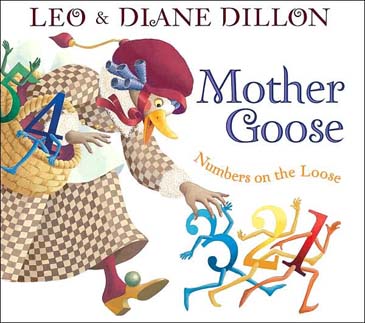
Mother Goose Numbers on the Loose

ALA Notable Books for Children Award 2008

Mother Goose Numbers on the Loose by Leo & Diane Dillon.  Harcourt, 2007.  Mother Goose Picture Book.
Familiar, Favorites, Rhythm, Rhyme, Engaging, Mother Goose, Updated, Classic, Memorable, Numbers
Rhymes both familiar and not retold with new engaging illustrations.
The rhythm of favorite Mother Goose rhymes combined with vibrant depictions embrace the style and prose that readers have come to expect while emphasizing numbers.  Updated and timeless classics create a memorable new childhood favorite.  Engaging illustrations of numbers running at large convey the humor of the rhyme.

Sunday, March 6, 2011

The Old Woman and Her Pig

Parent's Choice Award Winner 2007

Citation:
The Old Woman and Her Pig:  an Appalachian Folktale by Margaret Read MacDonald. Illustrations by John Kanzler. (Harper Collins Publishers, 2007).  28p. Traditional Picture Book.

Summary:
A mom trying to return home to her son before dark seeks the help of other animals persuading her pig to cross the bridge.

Critique:
a.         The vibrant illustrations bring the joy and concern of the mother to life and the feelings of the animals.
b.         The bright array of colors portrays feelings as the mother travels to town and home from the market.  As darkness begins to fall, the mother concerned about getting home to her son, but taking comfort that the moon shines at night.  The colors of the animals are intense to encourage the reader to focus on their plights and desires.  The cat, who loves the son, eventually starts a chain reaction that motivates the pig to cross the bridge so the mother can get home to her son.
c.         “And the old woman began to cry.  ‘I can’t get to my little boy tonight.  It’s almost dark…but the moon does shine’” (p. 13, 16, 18) is repeated in the story and when she retells the story to the cat he complies with her request and they all make it home to the boy where the moon is shining brightly upon the farm.   

Curriculum Connection:  
The Old Woman and Her Pig could be best served in an early elementary school classroom where perseverance and asking for help is covered in a social emotional lesson.  It could also be used within a social studies lesson of country life.  While some of the words are not familiar to all children the meaning will quickly be discovered as the story progresses and engage the students along the way.

Chicken said, "Cluck!"

Geisel Medal Award Honor Book 2009

Citation:
Chicken said, “Cluck!” by Judyann Ackerman Grant. Illustrations by Sue Truesdell (Harper Collins Publishers, 2008).  32p. Geisel Picture Book.

Summary:
Earl and Pearl work in the garden, Chicken seems to be in the way.  Chicken saves the garden when Earl and Pearl cannot.

Critique:
a.         The repetitive phrases used throughout the book engage the
             emerging reader.
b.         Chicken scratches and clucks and seems to be in the way, and Earl and Pearl remind Chicken of this time and time again.  The familiar words and simple language used allow beginning readers to feel confident in their abilities to read this tale of teamwork and talents.
c.         “‘Shoo!’ said Earl.  ‘Shoo!  Shoo!’ said Pearl.  ‘Cluck! Cluck! Cluck!’ said Chicken” (p. 7, 10, 13, 21) are staple passages throughout the story that is the precursor and the solution for garden success.

Curriculum Connection:  
Chicken said, “Cluck!” would be a fantastic story to be used in a kindergarten class in a science studying insects or life cycles of a plant.  The entertaining story will provide students with a basic understanding of what is needed to grow vegetables and the food chain.

Saturday, March 5, 2011

Fish

A story of Survival and Hope

Citation:
Fish by L. S. Matthews.  (Delacorte Press, 2004).  183p. Contemporary Literature Junior Book.

Summary:
A story of a young boy “Tiger” and his family on a journey to escape a war enclosing on the village while keeping his fish alive.

Critique:
a.         The descriptive words used set the tone and troubles Tiger and his family encounters.
b.         Creating a story set in an area that is on the verge of war and the travel and attempt to keep a fish alive can be difficult to bring the reader in, but with the use of a first person narrator, the reader is afforded the thoughts, desires, and fears of Tiger.  The fish takes on a symbol of hope and safety for the boy, and he goes to great lengths to save the fish, which also becomes the symbols for his parents as well.
c.         “’You just have to keep him wet.  He will live long enough.’  Dad said urgently, ‘In your mouth, now!’ and I took the limp creature from his hand without another word, and slipped him into my mouth” (p. 171) is another demonstration of the tenacity and commitment of Tiger and his family to keep the Fish, and their symbol of hope and perseverance, safe.

Curriculum Connection:  
Fish would be a good extended read aloud book to use for writing prompts.  The situations and trials the boy, his family, and the fish experience provide enough moments with an uncertain future or outcome.  Some of the descriptions are violent, which is appropriate to describe the war affected region the story is set, which is best to be used with upper level elementary or middle school students.

The Man Who Walked Between the Towers

Caldecott Medal Award Winner 2004

Citation:
The Man Who Walked Between the Towers by Mordicai Gerstein.  (Roaring Book Press, 2003).  36p. Historical Literature Picture Book.

Summary:
Philippe Petit’s true story of his adventure walking on a cable between the World Trade Center towers in 1974.

Critique:
a.         The hues of blues and purples bring life to the story of Philippe Petit’s experience of walking above New York City between the World Trade Center towers.
b.         The true story is brought to life once again with the shades of blue and purple used to create the sky and peace that Philippe Petit felt as he worked to create the cable to walk on as well as the act itself.  The hues present a calming effect for the dangerous adventure.
c.         “He was not afraid.  He felt alone and happy and absolutely free” (p. 20) provides the words for what the illustrations represent.

Curriculum Connection:  
The Man Who Walked Between the Towers could be used in a mathematical lesson about distance and estimation or a science lesson about tension and weight.  Within a physical education classroom this story could be used as a literary introduction to balance and stability.

Tuesday, February 22, 2011

The House in the Night

Caldecott Medal Award Winner 2009

Citation:
The House in the Night by Susan Marie Swanson.  Illus. By Beth Krommes. (Houghton Mifflin Company, 2008). 36p. Traditional Picture Book.

Summary:
A young girl discovers a book that takes her on a journey and returns her at bedtime.

Critique:
a.         The scratchboard illustrations use white, black, and yellow to create an imaginative and bedtime feeling.
b.         The illustrator’s choice of colors enhances the story and the feeling that it creates.  It is effective in creating a calming atmosphere that is perfect as a bedtime story.
c.         “the house in the night, a home full of light” (p. 35- 36) is the picture perfect ending that brings the story to a close.

Curriculum Connection:  
The House in the Night would be a nice story to be used in an art class where focus colors are used.  This story can also support a science connection to address nighttime.

Homeless Bird

Newbery Medal Award Winner 2000

Citation:
Homeless Bird by Gloria Whelan. (Harper Collins Publishing, 2000). 186p. Contemporary Realism Junior Book.

Summary:
Koly, a young girl in India, is bound by the traditions imposed upon her until one day with a twist of fate her life is forever changed.

Critique:
a.         The story that Koly tells draws the reader in, so that the reader can understand her hopes, dreams, fears, and emotions.
b.         Koly’s story is shared by Koly herself which allows the reader to hear her thoughts and experience her feelings as her life unfolds.  Using Koly as the storyteller, it implores the reader to suffer her disappointments and hope for some happiness.
c.         “If there were such cruelness in the world, then it might indeed be true that Sass had taken me to this place of widows just to get rid of me” (p.107) advises the reader the alone feeling that Koly was feeling.  “This time as I embroidered, I thought only of my own joy” (p.178) allows the reader’s heart to fill will happiness for Koly’s joy.

Curriculum Connection:  
Homeless Bird would be best used when discussing cultural differences and traditions.  It is also a coming of age story for a teenage girl that could be used to create a Venn Diagram of similarities and differences to a typical American teenage girl.